Friday, October 20, 2006

How will a doctor diagnose my high cholesterol?

Exams and Tests
You will need a blood test to check whether you have high cholesterol.
A total cholesterol test measures whether your cholesterol is high or low. You can have this test done at any time, even if you recently had a meal or snack.
A lipoprotein analysis is a more thorough test. It measures your total cholesterol as well as your LDL, HDL, and triglyceride levels. It is called a fasting test because you are not supposed to eat for 12 hours before having your blood drawn.
While knowing your total cholesterol level is important, a lipoprotein test will help your doctor make certain decisions about your treatment. Knowing the levels of your good cholesterol (HDL), bad cholesterol (LDL), and triglycerides will help your doctor decide whether to prescribe medicine right away or whether you first can try making changes in your diet and lifestyle to lower your cholesterol.

The following will help you understand the results of your test:
Total cholesterol
Best Less than 200 milligrams per deciliter (mg d/L)
Borderline high 200 to 239
High 240 or above

LDL (bad) cholesterol
Best Below 100 mg/dL
Near best 100 to 129
Borderline high 130 to 159
High 160 to 189
Very high 190 and above


HDL (good) cholesterol
Best 60 mg/dL or higher protects against heart disease
Good Above 40
Bad Below 40
Triglycerides Borderline high 150 to 199 mg/dL
High 200 or more

During your doctor visit, it will be important to discuss other things that increase your risk for heart problems, such as smoking, diabetes, high blood pressure, and a family history of high cholesterol.
You may need other tests to determine whether another health problem, such as low thyroid, is causing your high cholesterol. Some medicines may also cause high cholesterol, so it is important to tell your doctor about everything you take.
Along with your cholesterol levels, your doctor will use this information to determine your risk for coronary artery disease (CAD) and heart attack. If you have a high risk of heart disease, or if you already have heart problems, your doctor will be more likely to prescribe medicine. For more information, see the topic Coronary Artery Disease.
If you have high cholesterol or high blood pressure, you should get tested regularly for diabetes. Recent studies show that finding and treating diabetes early can lower the risk of heart attack.
2
Recently, the American Heart Association (AHA) and the U.S. Centers for Disease Control and Prevention (CDC) released recommendations for C-reactive protein (CRP) testing. The AHA/CDC panel recommends that CRP testing be done on some people who are at risk for developing coronary artery disease. Ask your doctor if CRP testing would be helpful in guiding your treatment.

Early Detection
Some doctors and health organizations recommend that everyone older than 20 be checked for high cholesterol. How often you should be checked depends on whether you have other health problems and your overall chance of heart disease.
3
Two new studies on CRP levels and statin treatment show that testing CRP levels may help predict heart attack risk even when a person has a normal or low level of LDL cholesterol.
4, 5

Thursday, October 19, 2006

What problems does high cholesterol cause?

What Happens
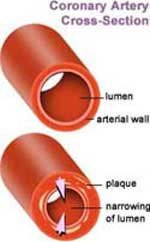
Either high LDL cholesterol or low HDL cholesterol may lead to the buildup of cholesterol (plaque) in artery walls. This buildup, called atherosclerosis, hardens and narrows arteries and reduces blood flow to body tissues, including the heart muscle. Atherosclerosis can lead to:
Coronary artery disease (CAD), which can cause chest pain, heart attack, heart failure, or irregular heartbeat (arrhythmia). For more information, see the topic Coronary Artery Disease.
Stroke or transient ischemic attack (TIA). Atherosclerosis, when it affects arteries that supply blood to the brain, may lead to a stroke or TIA. For more information, see the topics Stroke and Transient Ischemic Attack (TIA).
Peripheral arterial disease, which is caused by atherosclerosis in blood vessels that supply blood to the legs, arms, and other parts of the body. Reduced blood flow to the legs may cause pain or cramps in the calf, thigh, or rear end (buttock). For more information, see the topic Peripheral Arterial Disease of the Legs.
Use this Interactive Tool: Are You at Risk for a Heart Attack?
Cholesterol levels naturally increase with age. They also increase after menopause in women and as a result of certain medical conditions such as diabetes.

What increases my risk for high cholesterol?

Some things that increase your risk for high cholesterol are within your control; some are not. It is important to lower your risk as much as possible.
Things you can control include:
Eating a high-saturated-fat, high-cholesterol diet, which may raise LDL cholesterol and lower HDL cholesterol.
Being overweight, which lowers HDL and may raise LDL.
Not getting enough regular physical activity, which may raise LDL and lower HDL.
Smoking, which may lower HDL by as much as 15%.
You may be able to control some other conditions that can raise cholesterol, including diabetes and metabolic syndrome.
Things you cannot control include:
Family history. If high cholesterol runs in your family, you may develop it, and it may be harder to treat.
Age and gender. After you reach age 20, your cholesterol levels naturally begin to rise. In men, cholesterol levels generally level off after age 50. In women, cholesterol levels stay fairly low until menopause, after which they rise to about the same level as in men.

What are the symptoms of high cholesterol?

Symptoms
High cholesterol does not make you feel sick. It is usually found during a routine cholesterol and triglycerides test, a blood test that measures cholesterol levels. You may first discover it when you are diagnosed with a condition that is caused in part by high cholesterol, such as coronary artery disease (CAD), stroke, peripheral arterial disease, or inflammation of the pancreas.
Some people with lipid disorders, such as familial hypercholesterolemia, may have other distinct symptoms such as deposits of excess cholesterol that collect in the skin. These cholesterol deposits can also cause bumps in tendons in the hands or feet.

What are the symptoms of high cholesterol?

Symptoms
High cholesterol does not make you feel sick. It is usually found during a routine cholesterol and triglycerides test, a blood test that measures cholesterol levels. You may first discover it when you are diagnosed with a condition that is caused in part by high cholesterol, such as coronary artery disease (CAD), stroke, peripheral arterial disease, or inflammation of the pancreas.
Some people with lipid disorders, such as familial hypercholesterolemia, may have other distinct symptoms such as deposits of excess cholesterol that collect in the skin. These cholesterol deposits can also cause bumps in tendons in the hands or feet.

High Cholesterol Causes

High cholesterol may run in your family. The foods you eat may also cause high cholesterol. Causes include:
What you eat. Eating too much saturated fat can cause high cholesterol. You will find this unhealthy fat in foods that come from animals. Beef, pork, veal, milk, eggs, butter, and cheese contain saturated fat. Packaged foods that contain coconut oil, palm oil, or cocoa butter may have a lot of saturated fat. You will also find saturated fat in stick margarine, vegetable shortening, and most cookies, crackers, chips, and other snacks.
Your weight. Being overweight may increase triglycerides and decrease HDL.
Your activity level. Lack of physical activity, which may increase LDL and decrease HDL.
Your age and gender. After you reach age 20, your cholesterol levels naturally begin to rise. In men, cholesterol levels generally level off after age 50. In women, cholesterol levels stay fairly low until menopause, after which they rise to about the same level as in men.
Your overall health. Having certain diseases, such as diabetes or hypothyroidism, may cause high cholesterol.
Your family history. If family members have high cholesterol, you may also.
Cigarette smoking. Smoking can lower your good cholesterol.
In rare cases, high cholesterol is caused by an inherited problem called a lipid disorder that changes the way the body handles cholesterol. People with lipid disorders may have total cholesterol levels well over 250 milligrams per deciliter. Certain types of inherited lipid disorders may be more difficult to treat.

Cholesterol Frequently Asked Questions


Frequently Asked Questions
Q:
Does caffeine raise blood cholesterol levels?
A:
Caffeine is found in many soft drinks, coffee, tea, and to a lesser extent, chocolate. Caffeine does not raise blood cholesterol levels, and research has yielded conflicting results on whether caffeine increases risk of heart disease. Based on current evidence, a moderate intake of caffeine does not seem to be harmful.
Q:
Should a person avoid eating eggs entirely?
A:
Health experts advise limiting cholesterol intake to 300 milligrams or less daily. One large whole egg yolk contains about 215 milligrams of cholesterol. The American Heart Association recommends limiting egg yolk consumption to three to four times weekly and focusing on the total diet instead of just one food. The cholesterol in eggs is found in the yolk portion, so you can use as many egg whites as you want. Eggs contain B vitamins, iron and other minerals and are a good source of high-quality protein.
Q:
Can fat substitutes help lower blood cholesterol?
A:
Many low-fat foods and fat replacers have made reducing fat intake easier. Often, however, these fat substitutes are used in foods such as cookies, chips, or desserts. While lower in fat, such foods often contain the same number of calories as their comparable counterparts. Overeating on low-fat foods can still contributes to obesity, which in turn contributes to high blood cholesterol and other health problems. Further, these foods often lack the vitamins, minerals, fiber, and other healthy substances found in alternative food choices such as fruits, vegetables, and whole grains.
Q:
Should a person avoid dairy products to lower cholesterol?
A:
Skim milk and low-fat dairy products contain only small amounts of saturated fat and cholesterol and can easily be included in a low-fat, low-cholesterol eating plan. In addition, dairy products are excellent sources of calcium, a mineral that may help prevent the development of osteoporosis, or brittle bones, later in life.
Q:
Should people trying to lower their cholesterol level use margarine or butter?
A:
Although butter is high in both saturated fat and cholesterol, some margarines may not be much better than butter. Stick margarines that have been hydrogenated, or chemically changed, contain trans-fatty acids, a type of fat that can raise blood cholesterol levels. Choose liquid vegetables oils or soft margarines over stick margarines or butter. The softer a margarine is, the more unsaturated it is. As a general rule, shop for margarine with no more than 2 grams of saturated fat per tablespoon and with liquid vegetable oil listed as the first ingredient.
Q:
Can fish oil help lower cholesterol?
A:
Although fish oil may lower levels of blood triglycerides (another type of fat) and very-low-density lipoprotein (VLDL) cholesterol, it does not seem to significantly lower the LDL, or bad type of cholesterol. However, fish is a great protein source that is very low in fat and saturated fat. Eating fish two to three times weekly does helps to lower risk for heart disease, possibly by interfering with the ability of blood to clot. The American Heart Association recommends that people eat fish regularly but does not advise taking fish oil supplements.
Q:
Should people use oat bran to lower cholesterol levels?
A:
Oats and oat bran contain generous amounts of soluble fiber, which helps to lower the bad LDL cholesterol and raise the good HDL cholesterol. However, some oat bran muffins can be high in fat and calories, so read labels carefully. Although oat bran may help lower cholesterol, many other foods, particularly legumes and certain fruits, are also rich in soluble fiber. The body needs both soluble and insoluble fiber to function properly.
Q:
How do I know the amounts of fat, cholesterol, and sodium in the foods I eat?
A:
Read food labels. The labels on the packaging of the foods you buy will list these amounts, as well as other helpful information such as fiber and vitamin content. The quantities given on food labels are on a "per-serving" basis. The top of the label will define what a "serving" is for that particular food.

It's not Your Weight, It's Your Waist

LDL cholesterol deposited on artery walls forms atherosclerotic plaques. This is why high levels of LDL cholesterol are a major risk factor for cardiovascular disease.
The amount of LDL cholesterol is not especially increased in people who are obese, but the particles of LDL in their blood are likely to be smaller and denser than the LDL in people of normal weight. Small, dense LDL is more readily oxidized, and oxidized LDL more easily enters arterial wall cells to cause atherosclerosis.
So what's the connection between LDL cholesterol and the amount of fat around your belly? Research has found that individuals with an enlarged waist circumference (40 inches or more in men, 35 inches or more in women) also have high blood levels of oxidized LDL, the kind that's more likely to cause atherosclerosis.
In addition, the other cardiovascular risk factors associated with obesity (high blood pressure, high blood glucose, low HDL cholesterol, and elevated triglyceride levels) are also more closely tied to intra-abdominal fat than to body weight.
These findings are consistent with many studies which have found that the risks for cardiovascular disease and diabetes are more closely related to the amount of fat within the abdomen than to body weight itself.
It's never too late to get rid of extra fat within the belly. And the good news is that abdominal fat is the first to go during weight loss

When High Cholesterol Is Inherited

You've tried everything to lower your high cholesterol, including eating a diet low in saturated fats, exercising regularly, and increasing your fiber intake. Still, your cholesterol refuses to budge. You may have what's called familial hypercholesterolemia (FH).
FH is the best understood lipid abnormality and probably the most common of all inherited disorders. The disorder is caused by an abnormality in the receptor for low density lipoprotein (LDL) that results in poor removal of LDL from the blood.
Usually, half of the children of a parent with this abnormality will inherit an abnormal form of the gene for the LDL receptor. While only one in a million people in the U.S. will inherit an FH gene from both parents (homozygotes), one in every 500 people in this country will get it from only one parent (heterozygotes).
LDL cholesterol levels in people with FH can exceed 1000 mg/dL in homozygotes and range from 300 to 600 mg/dL in heterozygotes. Homozygotes usually die of coronary artery disease and narrowing of their aortic valve before the age of 20. Left untreated, heterozygotes begin to have heart attacks 10 to 15 years earlier than unaffected men and women.
Generally, FH is suspected when a person has high cholesterol coupled with a family history of both high cholesterol and premature coronary artery disease. Children with FH have high cholesterol levels at birth. Later in life, the diagnosis can be confirmed with near certainty when there is thickening of the Achilles tendons or lumps in other tendons.
Doctors usually begin treating FH with a low-fat, low-cholesterol diet, but people with this disorder don't respond well, if at all, to these dietary measures. Statins are usually the most effective drugs to lower cholesterol. Because they work by increasing the number of LDL receptors, however, statins don't work in homozygotes, whose LDL receptors are either absent or defective. The best treatment for people with homozygous FH is to remove the LDL by plasmapheresis about every two weeks. In this procedure blood is withdrawn and separated into plasma and cells, and the cells are returned.
People with heterozygous FH usually respond to statins, though often not as well as other people. Their LDL cholesterol levels may be lowered further by blocking the body's absorption of cholesterol with ezetimibe (Zetia) or bile acids with a bile acid sequestrant such as cholestyramine (Questran), colestipol (Colestid), or colesevelam (Welchol).
If you think you or your children may have FH, it's critical to recognize and treat it as early as possible to prevent the almost inevitable development of coronary heart disease.

Monday, October 16, 2006

HEMROIDS - What they are

Normally, everyone has an internal hemroid or two, but they are not normally noticable - the hemroid / hemroids typically remain out of sight and show no signs nor symptoms. When the hemroids do intitially show themselves, the common reaction is one of shock, fear and concern. All of a sudden, one's nice looking bottom has the insides look like they are falling out of it! For some it's the shock of seeing lots of blood suddenly coming out or severe excruciating pain from a hemroid thrombosis. Enough to get any ones attention. Fortunately, all hemroids really are, are swollen blood vessel, which for most people, is easily cured or relieved.
Self diagnosis of hemroids is difficult. A non-medical person may confuse hemroids with warts, abscess, anal fissure, anal prolapse, cancer or other conditions. A picture of hemroids is included here to assist you, but medical assessment is strongly suggested.

Firstly, hemroids are varicose veins of the anal region - enlarged, dilated veins of the hemorrhoidal plexuses ( hemorrhoidal plexuses being the network of blood vessels of the lower rectum and anal canal, to be medically precise ).
If the varicose vein is outside the anus, but close to it, it is described as an external hemroid, some doctors will even call a varicose vein on the upper part of the leg as a hemroid! Specifically, external hemroids have two main symptoms: They are seen as little bleeding areas that occur under the skin near the anus, which can be felt as hard lumps.
If the varicose vein is inside, it is referred to as an internal hemroid although they may bleed, they are seldom painful unless infected.
If the varicose vein is internal, but hangs outside where you can see it or feel it, it is referred to as a hemroid prolapse or a prolapsed hemroid.
The more veins affected, the more hemroids you have.
An alternative definition of internal hemroids that I have come across states that hemroids are normal and helpful, as they protect and cushion the rectum. It is only when they become troublesome that we have to worry.
An alternative defintion for external hemroids - one encyclopedia I read referred to them as non-cancerous tumors!

Cooking Shrimp the Low Cholesterol Recipe Way:

Obviously, for a high cholesterol sufferer to have a meal of shrimp, the shrimp needs to be cooked without any fat nor oil, or very, very little oil - like a quick spray of oil.
1 pound / 400 gms of unshelled shrimp = 1/2 pound / 200 gms of peeled and cooked shrimp.
How to cook up tender shrimp in a low cholesterol way:
Most small shrimp cook in about 3 minutes.
Extra large size shrimp normally cook in 7 to 8 minutes, large shrimp - 5 to 7 and medium shrimp - 3 to 4 minutes.
The taste of shrimp is ruined through overcooking and the shrimp testure becomes tough and a bit rubbery.
For cooking shrimp, place a pound / 400gm of shrimp in a quart / 1 litre of fast boiling water with 3 tablespoons salt.
Cover the pot, quickly returning to boil, then simmer ..1... until the flesh ( if shrimp deshelled ) looks dull on the outside and opaque on the inside - Cut a shrimp open to test for the opaqueness on the inside. OR ..2... If the shrimp are still in their shells, once the shrimp shells turns pink, they are fully cooked .
Eat shrimp straight away - with cholesterol free, saturated fat free seasonings if desired.
If the shrimp are to be kept a while, then plunge the shrimp into cold water so as to halt the shrimp overcooking in it's own heat.

Is shrimp safe for a cholesterol sufferer?

Of course, the cholesterol in food is only a danger to the 25% of us whose body's absorb the cholesterol out of our food - for the other 75% of us, the cholesterol in prawns is of essentially no concern.
But, it gets better. That egg contains 6 grams of fat, of which two grams are saturated fat, whereas the shrimp has only 1/3 of that fat, but none of the saturated fat which is really dangerous to us cholesterol sufferers. So a cholesterol sufferer is better off eating prawns than eggs by a long shot. In fact, prawns appear to be much safer.
If that wasn't enough, 100 gm/ 4oz of shrimp also contains 490 mgs of omega3 and, as we all know, omega3 is good for cholesterol, good for lowering cholesterol, in fact omega3 is widely used to lower blood cholesterol levels. 490mgs is a whooping amount to find in any food source.
So, for the cholesterol sufferer, shrimp appears an ideal food for most of us. For most of us cholesterol sufferers, we may be able to eat as much as we want, provided we are not part of the 25% minority who absorb the cholesterol out of the food - for those cholesterol sufferers it would still be a very restricted food.

Is shrimp high in Cholesterol?

As can be seen from the tables above, shrimp cholesterol is quite high, but for comparative purposes, an equivalent amount of cholesterol is found in about a 2oz / 60 gram egg, So, cholesterol wise you can eat twice as much shrimp by weight as you would an egg.
So, from a cholesterol point of view a serving of shrimp once a week, maybe even twice a week, seems OK, all things being equal, as long as it replaces the whole egg serving you were allowed once or twice a week.

Shrimp Cholesterol

Is there cholesterol in shrimp? Is shrimp high in cholesterol? How much cholesterol in shrimp? Is shrimp safe for a cholesterol sufferer? How to cook up tender shrimp?
Most Americans consume about 2 1/2 pound (1 Kg) of shrimp each year. The most eaten varieties in the USA include Brown shrimp, Pink Shrimp, White shrimp and Black Tiger Shrimp.
A bit further north, In the North Pacific waters of Alaska, the commonly caught shrimp include Northern Pink Shrimp, Humpy shrimp, Coonstripe shrimp, Sidestripe shrimp and Spot shrimp.
In fact there are over 300 varieties of shrimp. Finding the cholesterol concentrations for 300 varieties of shrimp wasn't possible because many don't appear to have been analysed for their level of cholesterol .
How much cholesterol in shrimp:
Serving = 100 g of raw edible food, mixed species.Amount Per Serving Calories 106 Total Fat 1.73 g Total Protein 20.3 g Omega-3 0.49 g Cholesterol 152 mg Sodium 148 mg Source: USDA
Serving = 4 ounces of raw edible shrimp, mixed species.120 calories,2g fat,0g sat fat,0g mono fat,23g protein,1g carbohydrates, 167mg sodium,172mg cholesterol

LOW CHOLESTEROL CHICKEN GUMBO

1/2 c. flour1 bunch celery1 lb. fresh mushrooms, thin sliced1 bunch (about 6) green onion, chopped sm.1 med. onion, chopped sm.1 lb. lean baked chicken, cut into 1/4" cubes2 tbsp. light oil3 1/2 c. water1/2 tsp. salt1/4 tsp. cayenne pepper
1. Wash the celery, devein the celery with a peeling knife and then cut into thin slices.
2. Heat the oil in a large skillet, add flour and brown, stirring constantly (roux).
3. Bring water to boiling in a large pot then reduce heat. Add the roux slowly, stirring constantly.
4. Add the green onion, onion, mushrooms, celery and chicken one ingredient at a time, stirring frequently. Bring to a slow boil.
5. Add the salt and the cayenne pepper and simmer for 20 minutes. Use additional water to thin the gumbo.
Serves 3-4. Season to taste.

Friday, October 06, 2006

Ancient Folk Remedy Points Toward Possible New Way To Control Cholesterol, Researchers Say.

WASHINGTON (AP) -- A tree resin used in India for 2,000 years as a folk remedy for a variety of ailments has been found by modern researchers to be effective in controlling high cholesterol.
The sap from a tree known in India as guggul contains a compound that blocks the action of a cell receptor, called FXR, that helps regulate the level of cholesterol in the body, said David D. Moore, a molecular biologist at the Baylor School of Medicine in Houston. He is co-author of a study appearing Friday in Science Express, the electronic version of the journal Science.
"Our results suggest that other compounds that could affect FXR could also control cholesterol," said Moore. "This mechanism is completely different from the action of statin drugs," which are taken by millions of Americans to control cholesterol.
In studies at his Baylor lab, Moore and Nancy L. Urizar showed the guggul resin compound, called guggulsterone, acted on the FXR receptor.
Dr. David Mangelsdorf and Amy B. Liverman, researchers at the University of Texas Southwestern Medical Center in Dallas, then tested the compound in two types of mice, one with a normal FXR receptor and one without FXR. The study found that cholesterol levels dropped in the livers of mice that had the FXR receptor, but not in the others, thus proving that guggulsterone worked by affecting the FXR receptor.
Dr. Mitchell A. Lazar, an endocrinologist at the University of Pennsylvania, said the study is important because it suggests a new drug pathway for controlling cholesterol.
"We need to have multiple ways to lower lipids (cholesterol)," said Lazar.
He said the work also advances the notion that some traditional medicinal compounds may have important uses in modern medicine and emphasizes that the value of such compounds needs to be researched.
Exactly how guggulsterone affects the FXR receptor is unknown, Moore said.
"FXR regulates a number of genes and we are not sure which are the primary targets for lipid (cholesterol) control," said Moore, "but we have shown that this is a new mechanism for controlling cholesterol."
He said finding a new way to reduce cholesterol could be very important for patients who cannot tolerate the side effects that some people experience with statin drugs.
Guggulsterone is commonly available in health food stores, but Moore said he could not recommend people take it for cholesterol control because there is some evidence the compound affects the action of other drugs. More studies are needed to investigate this issue, Moore said.
The guggul tree, known technically as Commiphora mukul, grows in dry areas of India, Pakistan and Afghanistan. For thousands of years, folk healers have tapped the trees to make medicines used to control weight and to treat other ailments.
About 40 years ago, an Indian researcher found that the guggul compound also was effective in combating heart disease, a condition linked to cholesterol. Later studies in India showed that guggulsterone lowered cholesterol, and Indian health authorities approved the sale of the resin for treatment of heart disease.
Moore said more than 300 tons of the resin is used annually for medical purposes in India.
The FXR receptor controls cholesterol by regulating the level of bile acids in the body. Blocking the action of FXR would help the body rid itself of more cholesterol.
Normally, cholesterol is synthesized in the liver or enters the body from the diet. Statin drugs work by blocking an enzyme that helps to make cholesterol in the liver.
Bile acids, containing cholesterol, are made in the liver and go through the gall bladder to the small intestine where they help metabolize fats. The bile acid is then reprocessed and returned to the liver. Changing the action of the FXR receptor would mean that more cholesterol is excreted, Moore said.

New plant-derived treatment for obesity and diabetes described at ECO meeting

Mike Cawthorne presented results of a collaborative project between the Clore Laboratory, University of Buckingham, and Unilever Research to the 11th European Congress on Obesity, held in Vienna, Austria, 30 May - 2 June 2001.
Guggul lipid, a gum resin derived from the Indian shrub Commiphora mukul, reduced body weight gain and improved insulin sensitivity in an animal model of type 2 diabetes. Guggul lipid was found to be an activator of PPARg in reporter gene assays, to increase glucose uptake by skeletal muscle cells and to promote the conversion of pre-adipocytes in 3T3-L1 cells.
Guggul lipid is also known to reduce hypercholesterolaemia and this effect, combined with anti-obesity and anti-diabetic properties, suggests that guggul lipid may have potential advantages over current therapies.
The authors are A. Subramaniam, C. Stocker, M.V. Sennitt, S. Wang, A.L. Nolan, L. Brown, M. Bertrand, A. Peilow, A. Mayes and M.A. Cawthorne. The abstract is published in Int. J. Obesity 2001, 25, Suppl. 2, S24, Abs. O66.

Study Suggests Vegetarian Cheese Cuts Cholesterol

LONDON (Reuters Health) - Eating cheese made from vegetable oils rather than milk fat can reduce cholesterol levels in some people, a study from Finland shows.
After 4 weeks of eating a daily portion of vegetarian cheese, volunteers with moderately increased cholesterol saw levels drop by 5%, according to research carried out by the University of Kuopio and Oy Foodfiles Ltd, a private research body for the food industry. The research was sponsored by a producer of vegetable oils.
The cheese appears to work mainly by reducing levels of low-density lipoprotein (LDL) cholesterol, the "bad" cholesterol associated with increased risk of cardiovascular disease.
The results, published in the European Journal of Clinical Nutrition, suggest cheeses made from rapeseed oil could be a healthy alternative for those with slightly raised cholesterol levels.
Research leader Dr. Essi Sarkkinen and colleagues said in a report that rapeseed oil-based cheese might help people get their cholesterol levels down without losing out on the nutritional value of cheese in their diet.
"Our results have major practical implications," they write. "This single dietary modification has a clinically significant effect on serum, total and LDL cholesterol concentrations."
Cheese consumption in developed nations has been steadily increasing over the past 20 years. In the US, average annual consumption per head is 12.7 kilogrammes a year, while in Europe it's 17 kilos.
Although cheese provides valuable calcium, it is also high in saturated fat, which increases cholesterol levels.
Commenting on the report, Dr. Frankie Robinson of the British Nutrition Foundation said it was feasible that cutting out cheese rich in saturated fats could help lower cholesterol levels.
"By substituting it with polyunsaturated fats you might expect to see that kind of difference," said Robinson, who was not involved in the study. "But I very much doubt it contains any of the milk product that provides the calcium in cheese--there's not much calcium in rapeseed oil."
The Finnish researchers recruited 31 adults ages 25 to 65 with mild to moderately raised levels of cholesterol but no history of heart disease or other major illnesses.
All the volunteers were instructed to keep their alcohol consumption, smoking habits and medication the same throughout the study so as not to skew the findings. The same applied to their physical activity and consumption of vitamins and nutrients.
Half the group ate a daily portion of 65 grams of rapeseed-oil cheese, the other half a portion of ordinary cheese. After 4 weeks, the groups swapped over.
Laboratory tests on blood samples revealed that after 2 weeks of eating vegetarian cheese, total cholesterol levels were 6.7% lower than when they ate milk fat-based cheese. After 4 weeks, they were 5% lower.
Meanwhile, levels of LDL cholesterol in the same period were down 7% after 2 weeks and 6.4% after 4.
"Interestingly," the researchers note, "this single change in dietary habit resulted in a decline in total cholesterol concentration similar to reduction achieved by general dietary advice at population level."
SOURCE: European Journal of Clinical Nutrition 2002;56:1094-1101.
© Copyright Reuters 2002.

Cholesterol-lowering drug improves survival after heart transplant

DALLAS, Dec. 10 - Transplanted hearts stayed healthier in patients who took a cholesterol-lowering drug, according to an eight-year study reported in today's rapid access issue of Circulation: Journal of the American Heart Association.
After eight years, the survival rate for patients who received early simvastatin treatment was 88.6 percent compared to 59.5 percent of patients who didn't start simvastatin treatment until four years after transplant, says Klaus Wenke, M.D., lead author of the paper and assistant professor in the division of cardiac surgery at Munich-Bogenhausen, Munich, Germany.
The authors also studied the effects of simvastatin on the development of coronary artery thickening called transplant vasculopathy, which is a major long term complication of heart transplantation. Early simvastatin treatment cut in half the incidence of vessel thickening as measured by angiography, which probably explained the improved survival rate. After eight years, 54.7 percent of the patients in the untreated group had developed transplant vasculopathy, compared to just 24.4 percent of patients in the simvastatin group.
Wenke and colleagues studied 72 patients who had heart transplants beginning in 1991. All patients were put on a strict low-cholesterol diet after surgery. Thirty-five patients started daily simvastatin treatment four days after transplant, while 37 remained on dietary therapy alone. After four years, the results in the simvastatin group were "significantly better" so all patients were offered simvastatin, says Wenke.
Benefits of simvastatin may be due not only to its ability to reduce cholesterol, but also to its ability to reduce the growth of smooth muscle cells (cells in the vessel wall that contribute to vessel thickening).
In the study, the average age of patients in the simvastatin group was 49 and 47 in the control group. The average donor age was 30 in the simvastatin group and 34 in the control arm. In both groups, men outnumbered women: 30 men in the simvastatin group and 34 men in control group.
Co-authors are Bruno Meiser, M.D.; Joachim Thiery, M.D.; Dorothea Nagel, Ph.D.; Wolfgang von Scheidt, M.D.; Karl Krobot, M.D., M.P.H.; Gerhard Steinbeck, M.D.; Dietrich Seidel, M.D.; and Bruno Reichart, M.D.

Veggie RX For Cholesterol

2002-12-16 11:01:00
December 16, 2002 -- Eating more vegetables and soy-based foods may be as effective at reducing cholesterol as medication, new research shows.
Scientists at the University of Toronto have developed a vegetarian combination diet they say cuts cholesterol by almost a third in just one month.
The diet includes vegetables such as broccoli, red peppers, soy milk, soy sausages, oat-bran cereal, bread, fruit and nuts.
"This opens up the possibility that diet can be used much more widely to lower blood cholesterol, and possibly spare some individuals from having to take drugs," said Professor David Jenkins, who led the study.
The report is being published in the journal Metabolism.
NY Post Wire Services

Search For Cholesterol Absorption Genes Narrows To Two Chromosome Regions

Two people eat the same egg, cheese and ham muffin for breakfast, yet one absorbs significantly more cholesterol into his or her blood than the other. Why?
The answer, and all of its implications for combating heart disease, remains stubbornly hidden within our DNA. In recent genetic studies with lab mice, however, researchers at The Rockefeller University have begun to close in on the culprit genes.
"By determining the genetic basis behind the observation that some people absorb 25 percent of cholesterol from their diet, while others absorb up to 75 percent, we hope to develop new treatments to protect this latter group," says senior co-author Jan. L. Breslow, M.D., head of The Rockefeller University's Laboratory of Biochemical Genetics and Metabolism and former national president of the American Heart Association.
The researchers hope that the identification of genes that regulate cholesterol absorption in mice will lead them to the location of similar genes in humans - and ultimately to the development of drugs that specifically reduce cholesterol absorption and protect against coronary heart disease, the number one cause of death in the United States.
In the Dec. 10 issue of the Proceedings of the National Academy of Sciences (published online Nov. 22), the Rockefeller scientists report the use of mouse "genetic linkage mapping" technology to narrow the location of genes responsible for regulating the absorption of plant fatty molecules called "plant sterols" - markers of cholesterol absorption - to two distinct regions on chromosome 2 and 14.
While the exact location of the genes has not been deduced, the results indicate that the researchers have indeed uncovered their general vicinity: one of the putative sites has an incredibly high probability - a billion to one - of carrying the suspected genes.
"We are excited because our data analysis shows that cholesterol absorption genes are very likely hiding in chromosome 14," says Ephraim Sehayek, M.D., first author and principal investigator of the study and a clinical scholar at Rockefeller.
"Now that we know where to look, we can use a variety of techniques to uncover their identities."
Cholesterol: good and bad
Cholesterol is an essentially fatty molecule found in blood and in all body cells. But, when too much of it floats throughout the blood, this waxy substance can clog arteries that feed the heart and brain, ultimately leading to heart disease and stroke. Factors that bring about a rise in the level of blood cholesterol include saturated fatty acids and trans-fatty acids, common to red meats, dairy products and margarine - as well as dietary cholesterol itself, found in meat, eggs, cheese and other animal products.
But, while scientists know much about the role of cholesterol in heart disease, they poorly understand how the body absorbs cholesterol from foods.
That's why Sehayek and colleagues set out to discover the genes that regulate cholesterol absorption in mice. But to do this, they needed to directly measure the amount of dietary cholesterol absorbed into the blood of mice - a task confounded by the presence of non-dietary cholesterol in the blood. Cholesterol comes in two forms: dietary, which comes from foods; and non-dietary, which is made by the body. Their solution was to turn to plants.
Plants possess cholesterol-like molecules called plant sterols, which people also absorb from food. But unlike cholesterol, plant sterols are not produced by the body and thus their plasma levels directly reflect dietary absorption. In addition, previous studies have identified a rare genetic condition, beta-sitosterolemia, in which people absorb too much cholesterol and plant sterols from food and consequently develop heart disease at a young age. For these and other reasons, Sehayek chose to use plasma plant sterol levels as a marker of cholesterol absorption.
Breeding mice in search of genes
Next came the tricky part: genetic linkage analysis. In this gene-hunting technique, researchers crossbreed hundreds of mice in an attempt to link an observed trait to the genes that cause it. One experiment can take years and only sometimes results in the discovery of new genes.
The first step is to mate two strains of laboratory mice possessing opposite varieties of a trait of interest. Sehayek and colleagues began by mating a strain of mice they discovered to have low plasma plant sterol levels with another strain possessing high plasma plant sterol levels. Next, they crossbred the progeny of this mating while keeping track of each newborn animal's plasma plant sterol levels as well as their DNA make-up; for every 10 million base pair units or so of DNA, they asked if the DNA originated from the parent with high or low plant sterol levels.
By tracking the origin of the DNA in this way hundreds of times across the entire genome, the researchers were able to link plasma levels of plant sterols in mice to two distinct patches of DNA that must control these levels. In other words, they mapped the location of plant sterol genes to regions, or loci, on chromosomes 2 and 14. "Our data analysis shows a very strong signal at chromosome 14," says Sehayek. "This means that sterol absorption genes are most definitely somewhere in this region."
With their genes on the DNA map, the researchers now plan to apply both genetic and molecular tools to hunt down their precise location.
In the meantime, their findings already have applications for human studies. Several researchers in the Breslow laboratory, along with Rockefeller researchers Jeffrey M. Friedman, M.D., Ph.D., and Markus Stoffel, M.D., Ph.D., are involved in ongoing studies of the island population of Kosrae, located 5,400 miles off Los Angeles in Micronesia.
The Kosraeans possess to a high degree the collection of health problems known as "Syndrome X," including obesity, diabetes, high blood pressure and high blood cholesterol, Also, most Kosreans can trace their heritage to a relatively small "founder" population. Thus, by studying the genetic inheritance patterns of this group of islanders in a similar fashion to genetic linkage studies in mice, the researchers hope to identify the genes behind Syndrome X disorders.
The newly identified plant sterol absorption regions in the mouse now will guide the search for candidate DNA loci in the Kosrae population.
"By applying our findings in mice to human studies, we may actually gain clues to our hunt for mice genes," says Sehayek. "It's a back and forth process between humans and mice that hopefully will result in the discovery of novel human cholesterol absorption genes."
Other authors of this study include Elizabeth M. Duncan and Jennie G. Ono at The Rockefeller University; Deiter Lutjohann and Klaus von Bergmann at the University of Bonn, Germany; Ashok K. Batta and Gerald Salem at the Veterans Affairs Medical Center, East Orange, N.J.
Founded by John D. Rockefeller in 1901, The Rockefeller University was this nation's first biomedical research university. Today it is internationally renowned for research and graduate education in the biomedical sciences, chemistry, bioinformatics and physics. A total of 21 scientists associated with the university have received the Nobel Prize in medicine and physiology or chemistry, 16 Rockefeller scientists have received Lasker Awards, have been named MacArthur Fellows and 11 have garnered the National Medical of Science. More than a third of the current faculty are elected members of the National Academy of Sciences.
Note: This story has been adapted from a news release issued for journalists and other members of the public. If you wish to quote any part of this story, please credit Rockefeller University as the original source. You may also wish to include the following link in any citation:
News in Science 29/11/2002 Muscles play a part in regulating cholesterol

Natural Compound Used in India Reduces Cholesterol by Blocking Metabolism-Controlling Receptor

UT Southwestern Medical Center at Dallas researchers have helped prove that a naturally occurring compound used for centuries as a dietary supplement in India can help lower cholesterol levels.
The research, published in today’s issue of Science and done in collaboration with Baylor College of Medicine in Houston, shows that guggulsterone blocks the FXR receptor, which regulates cholesterol metabolism.
Dr. David Mangelsdorf, professor of pharmacology and an investigator in the Howard Hughes Medical Institute (HHMI) at UT Southwestern, and his colleagues previously had revealed FXR’s role in the body’s conversion of cholesterol to bile acids. When the bile acids reach a certain level in the body, FXR is activated to interrupt the cholesterol-to-bile-acid process.
“The receptor keeps bile acids in check,” Mangelsdorf said. “If you disturb it, it changes how cholesterol is metabolized.”
Researchers at Baylor discovered that guggulsterone – made from the sap of Commiphora mukul, a tree commonly known in India as guggul – blocked FXR activity in a gene assay. Assays are flat panels used to study genetic activity outside living bodies. Mangelsdorf and his colleagues had used mouse models created for their earlier FXR studies. Those FXR-positive and FXR-negative mouse models allowed the researchers to test whether guggulsterone and FXR reacted the same way in living bodies as they did in the assays.
The mouse model tests confirmed the assay results and showed that cholesterol levels fell in FXR-positive mice that were given guggulsterone.
Mangelsdorf believes the work could lead to new drugs to control cholesterol by creating compounds based on the chemical structure of guggulsterone. Those drugs would prevent FXR from interrupting cholesterol metabolism in people whose bodies aren’t getting rid of enough cholesterol before the process shuts down.
The gum resin of the guggul tree has been used in Ayurvedic medicine, a traditional Hindu medicine practiced in India for nearly 3,000 years, to treat a wide variety of ailments, including obesity and lipid disorders. An ethyl acetate extract of this resin has been found to lower low-density lipoprotein cholesterol and triglycerides in humans. Since receiving regulatory approval in India in 1987, this extract, called guglipid, has been widely and effectively used to treat hyperlipidemia, according to the study researchers.
###Amy Liverman, a student research assistant in Mangelsdorf’s lab, led UT Southwestern’s contributions to the research. X-Ceptor Therapeutics Inc. of San Diego also contributed to the research.
The study was supported by the National Institute of Diabetes and Digestive and Kidney Diseases, the U.S. Department of Agriculture, the National Institute of General Medical Sciences, HHMI, and the Robert A. Welch Foundation.

Study Finds Cholesterol Drug Does Not Cut Deaths

NEW YORK (Reuters Health) - Study after study has shown that cholesterol-lowering drugs called statins can prevent heart attacks, but in a new trial the statin pravastatin (Pravachol) did not reduce the risk of death and heart disease in people with moderately high cholesterol and high blood pressure.
But the results of the study do not mean that pravastatin or other statins cannot prevent heart disease, the study's lead author told Reuters Health.
In an interview, Dr. Barry R. Davis explained that pravastatin was effective at lowering cholesterol in a wide range of people in the study. But participants who did not take the statin but who instead received "usual care"--which could also include cholesterol-lowering medication--also experienced a drop in cholesterol, said Davis, who is at the University of Texas-Houston Health Science Center. The differences in how much cholesterol dropped in each group "were not big enough" to show an effect on heart disease and other clinical outcomes, Davis said.
Statins' record in clinical trials is impressive, but many groups of people, including women, older people, racial and ethnic minorities and people with diabetes, were not adequately represented in earlier studies. The new study, which drew participants from a larger study of treatments for high blood pressure, was designed to see how well a statin could prevent deaths in a wide variety of people.
The study included more than 10,000 people who were at least 55 years old and who had moderately high cholesterol and high blood pressure. Participants were randomly assigned to take pravastatin or to receive the "usual care" recommended by their physician. This care could include cholesterol-lowering drugs, but this was discouraged unless a person's health took a turn for the worse.
For lowering cholesterol, pravastatin was a success, according to a report in the December 18th issue of the Journal of the American Medical Association (news - web sites). Four years after the study began, total cholesterol had dropped 17% in people taking the statin and about 8% in the usual care group. And at the same time, testing of a random sample of participants showed that levels of LDL, the "bad" type of cholesterol, had dropped nearly 28% in the pravastatin group and 11% in the usual care group.
In a bit of encouraging news, Davis said, pravastatin lowered cholesterol in a wide range of people, regardless of age, sex, race or history of diabetes.
It is well known that lowering LDL cholesterol can reduce the risk of heart attack and stroke, but the study showed that people taking pravastatin were no less likely to die or develop heart disease than people receiving usual care.
These results do not mean that pravastatin does not provide clinical benefits, though, Davis said. He explained that during the course of the study, several other research teams reported studies demonstrating the powerful cholesterol-lowering effects of statins. Because of the increased awareness of statins, people in the usual care group were prescribed the cholesterol-lowering drugs "much more than we anticipated," Davis said.
The Houston researcher pointed out that cholesterol levels also dropped in the usual care group, although not as much as in people specifically assigned to take statins. Unlike in other statin trials, many of which compared the drugs to an inactive placebo, the difference may not have been big enough to detect any clinical benefits, Davis said.
The study was sponsored by the National Heart, Lung, and Blood Institute, but it also received funding from Pfizer. AstraZeneca, Pfizer and Bristol-Myers Squibb, which makes pravastatin, donated medications used in the study.
"Physicians might be tempted to conclude that this large study demonstrates that statins do not work," according to Dr. Richard C. Pasternak, of Harvard Medical School (news - web sites) in Boston, Massachusetts. "However, it is well known that they do," he concludes in an editorial that accompanies the study.
What may have happened, according to Pasternak, is that the drugs may not be as effective in ordinary settings as they are in clinical trials where participants are carefully selected and followed closely.
Pasternak has served as a consultant to or on the advisory boards of several pharmaceutical companies, including Bristol-Myers Squibb. In addition, he has received funding from Merck-Medco and has served on the speakers bureau for several drug makers.
Bristol-Myers Squibb was not available for comment at press time.
SOURCE: Journal of the American Medical Association 2002;288:1998-3007,3042-3044.

Monday, September 18, 2006

Cellular Search

Do your own ONLINE INVESTIGATION ......strange !!! nope its called instant detection of cellular phones........ mobilephoneno.com

World record mobile phone throw

Believe it or not, the men's world record for throwing a mobile phone is 94.97 meters (more than 100 yards), set by Mikko Lampi from Vilppula, Finland during the 2005 Mobile Phone Throwing World Championships. The women's winner, Marke Krok, threw it a still impressive 41,42 meters.These contests started in 2000, along with a recycling program.But, if you have a particular phone you want to throw, you'll have to do it on your own. The competitors don't get to choose, and must throw what they are given.So what's next? May I suggest a World "Slam The Smartphone Into The Wall Because It Crashed Again And I Didn't Have a Backup" Championship?Via Textually.


The 7th international Mobile Phone Throwing World Championships took place in Savonlinna on Saturday the 26th of August. The new champion is Lassi Etelätalo, Finland with result 89,00 m. In the Original individual category second was last year's champion Mikko Lampi with 87,17 meters and the third was Tomi Kurvi with a result of 80,20 meters.

Cholesterol's Harmful Effects


The Arteries eventually become narrower due to calcification and inelasticity (a condition known as stenosis). Eventually sufficient oxygen-rich blood is prevented from reaching the heart, due to the continued narrowing of the arteries.
Angina (discomfort and pain felt when a blockage in a coronary artery prevents oxygen-rich blood from reaching part of the heart), and in many cases heart attack (myocardial infarction) will ultimately result from this restriction of blood supply.

Cholesterol Lowering Supplements


Green Tea: Several compounds that interfere with the process of atherosclerosis can be found in green tea. The phytochemicals (or polyphenols) found in green tea appear to improve the metabolism of lipids and lower cholesterol. These compounds also act as antioxidants.

Tips for Eating Out

  • Fried, au gratin, crispy, escalloped, pan-fried, sautéed or stuffed foods are high in fat and calories. Instead, look for steamed, broiled, baked, grilled, poached or roasted foods. If you’re not sure about a certain dish, ask your server how it’s prepared.
  • Even if dishes low in saturated fat and cholesterol aren't on the menu, you may still be able to get a healthy meal, because many restaurants will prepare foods to order. If you’re not sure about a particular restaurant, phone before you go.
  • High-sodium foods include those that are pickled, in cocktail sauce, smoked, in broth or au jus or in soy or teriyaki sauce. Steer clear of these.
  • Try to replace the saturated and trans fats in your food with more healthful unsaturated oils. Canola, olive and corn oil are among the most desirable. Request soft and trans-fat-free margarine.

Thursday, September 14, 2006

Non Rhyming Messages

I opened my purse and found it empty.i reached in 2 my pocket and found a few coins then i searched my heart and found u!dats wen i realised how rich i am

Wrong Person Messages

Those innocent eyes... Those kissable lips... A great smile... The perfect walk... Smoothest talk... Absolutely gorgeous.. Thats enough bout me-How r u?

Word Play SMS

This cat is cat a cat good cat way cat to cat keep cat a cat idiot cat buzy cat for cat 20 cat seconds cat! NOW READ IT WITHOUT SAYIN CAT!

SMS Poems

STARS

If the universe did start with a bang
when God loved and the angels sang
one of the sparks that flew
chased time to become you

BOOK OF LIFE

Starting a new day,
Starting a new life,
Starting a new page,
In the Endless Book of Life.

TXT & SMS CHAT UP LINES

  • I lost my phone number, can I have yours?
  • There's a gap in your life! Mind if I fill it!
  • My face is leaving in fifteen minutes. Be on it.
  • I didn't believe in angels until I meet you!
  • If I could rearrange the alphabet, I'd put U and I together.

Pick Up Lines

Please help the homeless. Take me home with you...

Sunday, September 10, 2006

Would you fly in chattering class?

Mobile phones on planes
********The use of mobile phones on planes moves another step closer.....*********

LIKE it or not, the prospect of being able to use mobile phones on aeroplanes is inching ever closer. Last week Ryanair, a European low-cost carrier, announced that it would equip its entire fleet of Boeing 737s with small base stations, called picocells, provided by OnAir, a technology company backed by Airbus, Europe's aviation giant. The picocells will use satellite links to allow mobile phones to be used during flight without interfering with ground-based networks. (Such interference, rather than safety concerns, is the primary reason that in-flight use of mobile phones is banned at the moment.) Taking a cut of the resulting revenues will help Ryanair to keep its ticket prices down, according to Michael O'Leary, the firm's boss.


But it is uncertain just how popular, and hence how lucrative, in-flight calling will be. The technical obstacles have been overcome and regulatory approval is expected soon—at least in Europe. Regulators are expected to issue guidelines in the next few weeks defining which frequencies can be used and national aviation authorities will start certifying airlines' installations early next year. OnAir says it expects its technology to be approved in time for Air France to launch in-air calling on an Airbus A318 in the first quarter of 2007.

Mobile phones must still surmount social obstacles, however. Will people flock to airlines that offer in-flight calling, or avoid them? And how much will callers be prepared to pay? OnAir, its rival AeroMobile and other firms have conducted a series of surveys in an attempt to find out.
According to the latest survey, released by OnAir this week, 80% of airline passengers approve of the idea of being able to use telephones on aircraft, even if they do not plan to do so themselves. Indeed, only 54% of business travellers and 41% of leisure travellers said they would switch their phones on during a flight. One reason is cost: George Cooper, the boss of OnAir, says that at prices above $3 per minute, “demand drops off considerably”, according to the firm's research. He expects $2.50 per minute to be the norm when services based on his firm's technology are launched by Air France, Ryanair, bmi and TAP Portugal. But OnAir will then cut its prices by 10% a year for five years, he says.
Previous surveys have painted a less rosy picture. One survey of young mobile-phone users, carried out last year by IDC and SMS.ac, a mobile portal, found that 64% of young people favoured in-flight texting, and only 11% liked the idea of making calls. And 82% of respondents agreed with the statement “I don't want people talking on their phones during flights.”
Another, more rigorous survey, carried out in America for the Association of Flight Attendants-CWA, a flight attendants' union, found that 63% of those polled thought the ban on in-flight calling should be maintained. Concern over noisy passengers shouting into their phones, cited by 68% of people, topped the list of objections; only 2% worried that the use of phones might somehow help terrorists. (The AFA-CWA's objection to in-flight calling seems to be that it will make it harder for flight attendants to keep order.)
And when America's telecoms regulator, the Federal Communications Commission, requested public comments on in-flight calling, it received thousands of mostly negative responses. “Please no. No,” read one response. “I object to this in the strongest terms. I can't believe you are even considering it.” America's airlines seem to share this lack of enthusiasm for the idea. Both United and Delta say their customers do not want it.
But in-flight calling is coming to Asia. AeroMobile, a joint venture between Telenor, a Norwegian mobile operator, and ARINC, a technology firm, says it plans to launch in-air services with Qantas and a second, unnamed Asian airline. “We're exploiting the fact that any flights over the ocean do not require regulatory approval,” says Peter Tuggey of AeroMobile.
So the availability of in-flight communications seems likely to vary widely. Offering such a service, or not offering it, could enable airlines to differentiate themselves on particular routes. They could also impose quiet periods or mobile-free cabins. On long-haul flights, texting and Wi-Fi access might prove more attractive than voice-calling, provided the price is right—though Boeing recently axed Connexion, its impressive but little used satellite-based in-flight broadband service.
In-flight calling may in fact prove best suited to short-haul, low-cost flights. After all, people choose Ryanair and other low-cost carriers because of their low prices—not because they enjoy the flight. So the prospect of other passengers shouting into their phones may not put people off. Quite the opposite, in fact, if it can help to subsidise low ticket prices.

Top list of cellphone chatterers


Miami, LA top list of cellphone chatterers


Look who's talking! People in Miami and Los Angeles chat on their cell phones more than any other Americans, according to a survey of cell phone use in major cities.

People in Miami make and receive an average of 298 calls a month -- an average of 9-10 calls daily -- while Angelenos talk second most, averaging 260 calls per month, a survey of Verizon Wireless users found.
Rounding out the top 5 were Detroit, El Paso, Texas, and Las Vegas.
"Our study offers an interesting snapshot of how Americans have come to rely on their wireless service every day at home, and on the road," said Dick Lynch, chief technology officer for Verizon Wireless.
The East Coast -- particularly New York and Washington -- came out surprisingly low on the list -- possibly in part because hand-held cell phones have been banned while driving there for some years.
New Yorkers were 11th and Washington failed to find a place in the top 30.
California is also about to pass a ban on hand-held cell phones while driving that would likely cut cell-phone use by car-bound Angelenos dramatically when it takes effect in 2008.